How Football Betting Odds Work: A Simple Guide for Beginners
Football betting odds are one of the first things you need to understand before placing a football bet. Whether you are betting on the match winner, goals, Both Teams to Score or another market, the odds tell you how much you could potentially receive if your prediction is successful.
For beginners, betting odds can look confusing at first. However, once you understand what the numbers mean, calculating potential returns becomes much easier.
What Are Football Betting Odds?
 Understanding football betting odds helps bettors calculate potential returns and compare different selections.
Football betting odds represent the potential return from a bet and the bookmaker's assessment of the likelihood of an outcome.
For example, imagine a football match between Team A and Team B:
- Team A — 2.00
- Draw — 3.50
- Team B — 3.80
If you place ₦10,000 on Team A at odds of 2.00 and the selection wins, your total return would be ₦20,000.
Your potential profit would be ₦10,000, while your original ₦10,000 stake is included in the total return.
Remember that the odds do not guarantee that an outcome will happen. A team with low odds can still lose.
How to Calculate Your Potential Return
The basic calculation is simple:
Stake × Odds = Potential Return
For example:
₦5,000 × 2.50 = ₦12,500
If the bet wins at odds of 2.50, the total return would be ₦12,500.
Your potential profit would be:
₦12,500 − ₦5,000 = ₦7,500
This simple formula can help you understand the potential return before placing a bet.
What Do Low Odds Mean?
Low odds generally indicate that an outcome is considered more likely.
For example, a team might have odds of 1.30 to win a match, while its opponent has odds of 7.00.
The bookmaker's market is indicating that the first team is considered much more likely to win.
However, low odds do not mean a bet is guaranteed.
A strong favourite can still draw or lose, which is why football betting always involves risk.
What Do High Odds Mean?
Higher odds generally indicate that an outcome is considered less likely.
For example, a team priced at 6.00 may be considered less likely to win than a team priced at 1.50.
The advantage of higher odds is that a successful bet can produce a larger return.
For example:
₦5,000 × 6.00 = ₦30,000
However, the higher potential return comes with greater risk because the outcome is generally considered less likely.
Understanding Implied Probability

Football betting odds indicate the potential return and reflect the market's assessment of an outcome.
Betting odds can also be converted into an estimated probability.
For decimal odds, the basic formula is:
Implied Probability = 1 ÷ Odds × 100
For example, odds of 2.00 give:
1 ÷ 2.00 × 100 = 50%
Odds of 4.00 give:
1 ÷ 4.00 × 100 = 25%
This does not mean the event has exactly that probability of happening. Bookmakers include their margin in the odds, so the actual market probabilities across all outcomes will normally add up to more than 100%.
What Is the Bookmaker's Margin?
Bookmakers build a margin into their odds. This is sometimes called the overround or bookmaker's margin.
Consider a simple three-way football market:
- Home win — 2.00
- Draw — 3.50
- Away win — 4.00
Using implied probability:
- 2.00 = 50%
- 3.50 = 28.57%
- 4.00 = 25%
Together, these equal 103.57%.
The amount above 100% represents the bookmaker's built-in margin in this simplified example.
This is one reason why simply choosing the outcome with the lowest odds does not automatically mean you have found the best bet.
Football Betting Odds Can Change
Football odds are not always fixed.
They can change before a match starts because of factors such as:
- Team news
- Injuries
- Suspensions
- Starting line-ups
- Betting activity
- Changes in market expectations
- Weather conditions
- Important late information
For example, if a key striker is ruled out shortly before kick-off, the odds for that team may change.
This is why the odds you see earlier in the day may be different from the odds available shortly before the match.
Understanding Different Betting Markets
Odds are available across many football betting markets.
Match Result
You predict the home win, draw or away win.
Over/Under Goals
You predict whether the total number of goals will be above or below a specific line.
Both Teams to Score
You predict whether both teams will score at least one goal.
Double Chance
You select two possible match outcomes in one selection.
Correct Score
You predict the exact final score.
Each market has its own odds, and the odds reflect the bookmaker's assessment of the possible outcomes.
What Are Accumulator Odds?
An accumulator combines multiple selections into one bet.
For example:
- Team A to win — 1.50
- Team B to win — 1.80
- Over 1.5 Goals — 1.40
The combined odds are calculated by multiplying the individual odds:
1.50 × 1.80 × 1.40 = 3.78
A ₦5,000 stake at combined odds of 3.78 would have a potential total return of:
₦5,000 × 3.78 = ₦18,900
However, all the selections normally need to win for the accumulator to be successful.
Adding more selections can increase the potential return but also makes the bet harder to win.
What Is Value Betting?
Understanding odds is important because experienced bettors often look beyond whether a team is likely to win.
They may ask whether the odds offer value compared with their assessment of the probability.
For example, if you believe an outcome has a 60% chance of happening but the available odds imply a significantly lower probability, you may consider those odds potentially valuable.
Finding value requires research, probability assessment and discipline. It does not guarantee profit.
Do Higher Odds Mean Better Bets?
No.
Higher odds mean a larger potential return, but they generally also indicate a less likely outcome.
A common mistake among beginners is choosing a selection simply because it offers a large potential payout.
Instead, consider the probability of the outcome, the available odds and the information behind the prediction.
The goal should be to make an informed decision rather than simply chase the biggest number.
How Football Prediction Sites Use Odds
Football prediction websites can use odds alongside statistics and match analysis when assessing fixtures.
For example, Betzena provides football predictions across different markets, allowing users to review selections and their available odds.
However, odds should not be treated as predictions that are guaranteed to win. They are part of the betting market and can change before kick-off.
Users should also conduct their own research and understand the risks before placing a bet.
Common Mistakes When Reading Football Odds
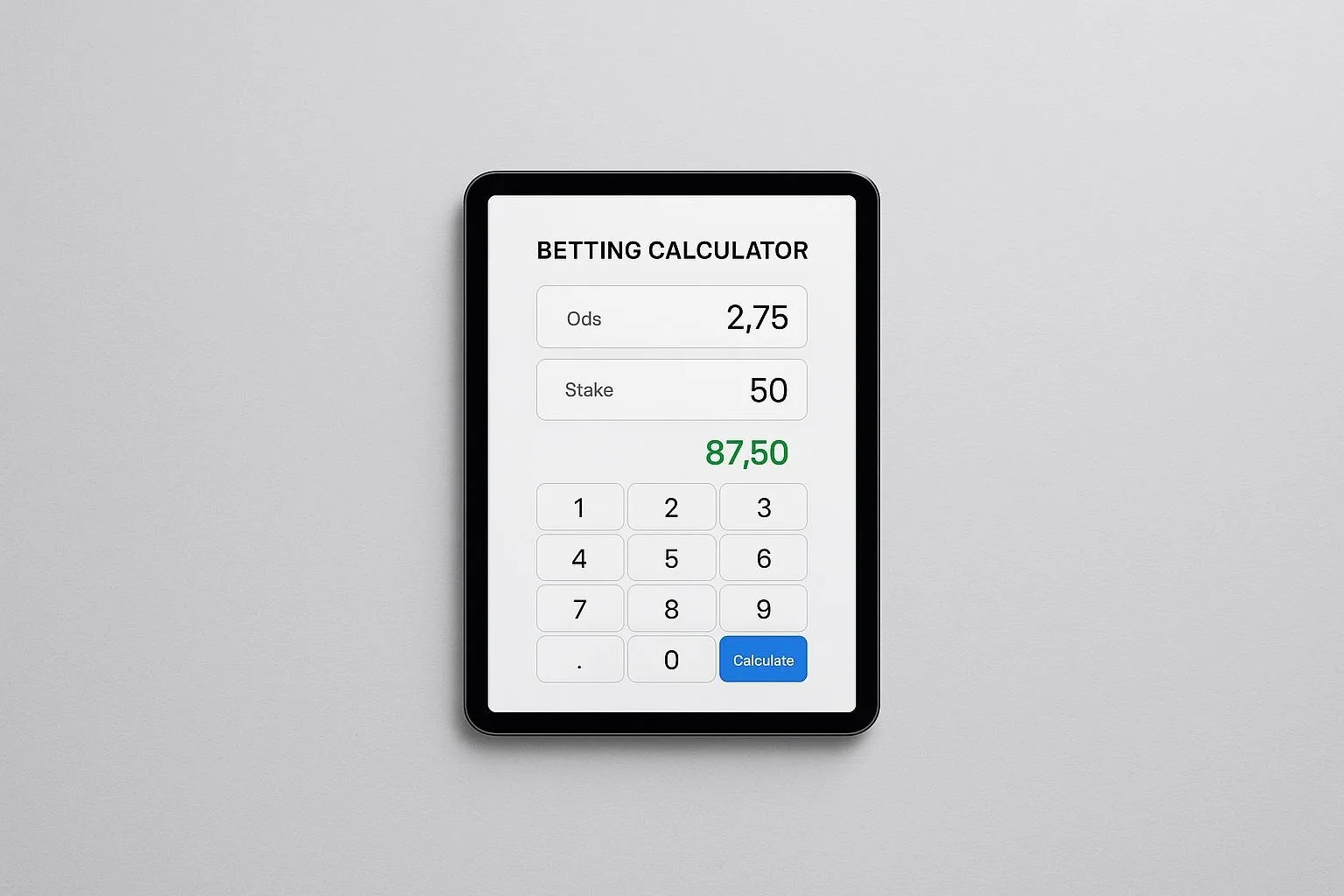 Accumulator odds combine the prices of multiple football selections into one potential return.
Beginners can make several mistakes when they first start betting.
Assuming Low Odds Mean Guaranteed Wins
A 1.20 selection can still lose.
Ignoring the Stake
Odds alone do not determine how much you will make. Your stake also matters.
Chasing High Odds
Choosing very high odds simply because they offer a large potential return can increase your risk.
Ignoring Changes in Odds
Odds can change because of new information, so always check the current price before placing a bet.
Forgetting That Betting Involves Risk
There is no guaranteed football betting strategy. Every selection can lose.
Final Thoughts
Understanding how football betting odds work is an important part of becoming a more informed bettor.
The numbers show the potential return and reflect the market's assessment of an outcome. Lower odds generally indicate a more likely outcome, while higher odds generally offer a larger potential return but represent greater uncertainty.
Learn how to calculate potential returns, understand implied probability, compare markets and recognise the bookmaker's margin.
Most importantly, never assume that any odds guarantee a winning result. Football is unpredictable, so always manage your stakes responsibly and only bet with money you can afford to lose.